


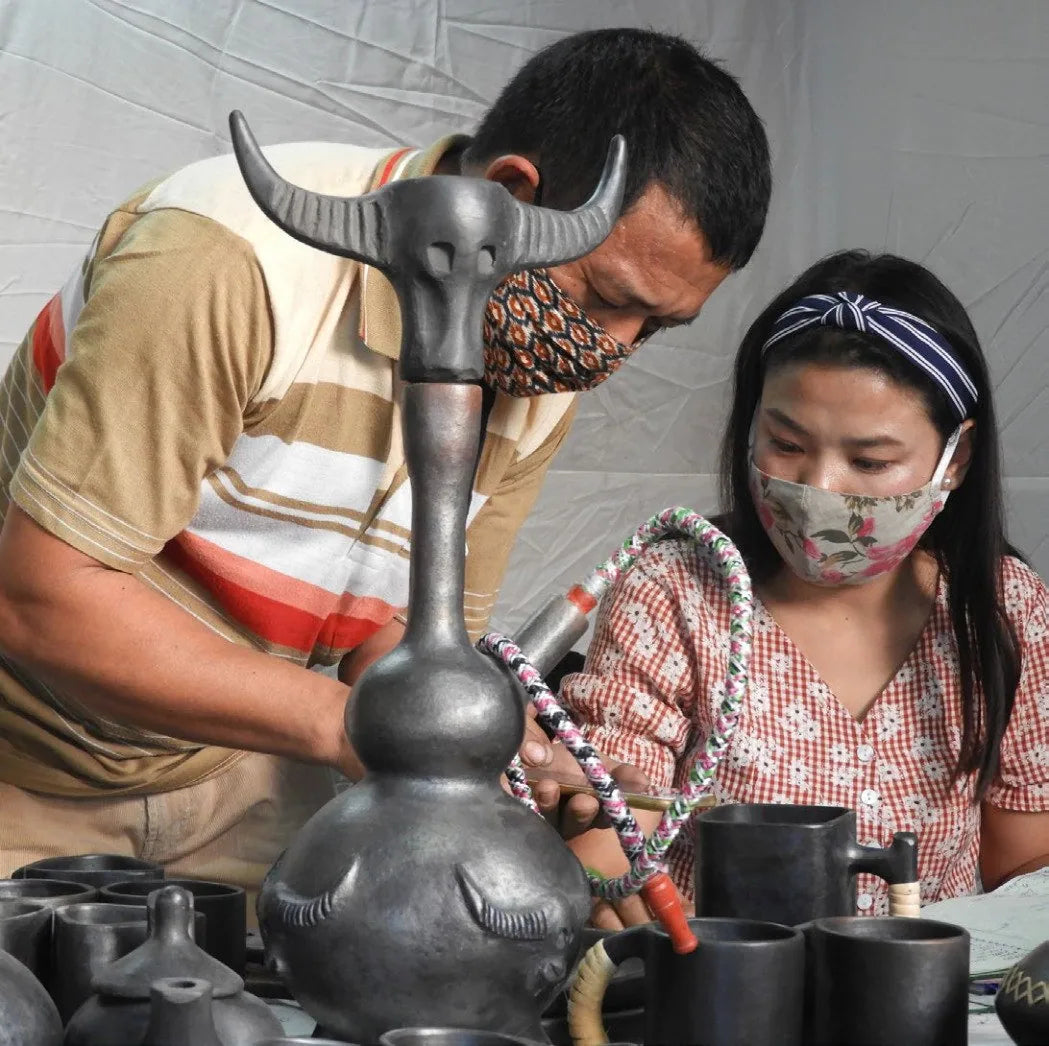
Longpi black pottery
No wheel is used. Each piece is shaped by hand from ground black serpentinite stone and a brown clay found only in Longpi village. Master artisan Thoiba Singh grew up in a family of potters.
Shop Longpi pottery →Six crafts, each traced to the town that keeps it. Pick a stop, or keep scrolling to walk the whole route.


Brought to Kashmir from Persia in the 14th century, papier-mâché found a home with artisans who filled it with vibrant colour and delicate floral motifs.


The artisans of Saharanpur’s Lakkad Bazaar, the wood market, carve magic into ordinary pieces of wood.
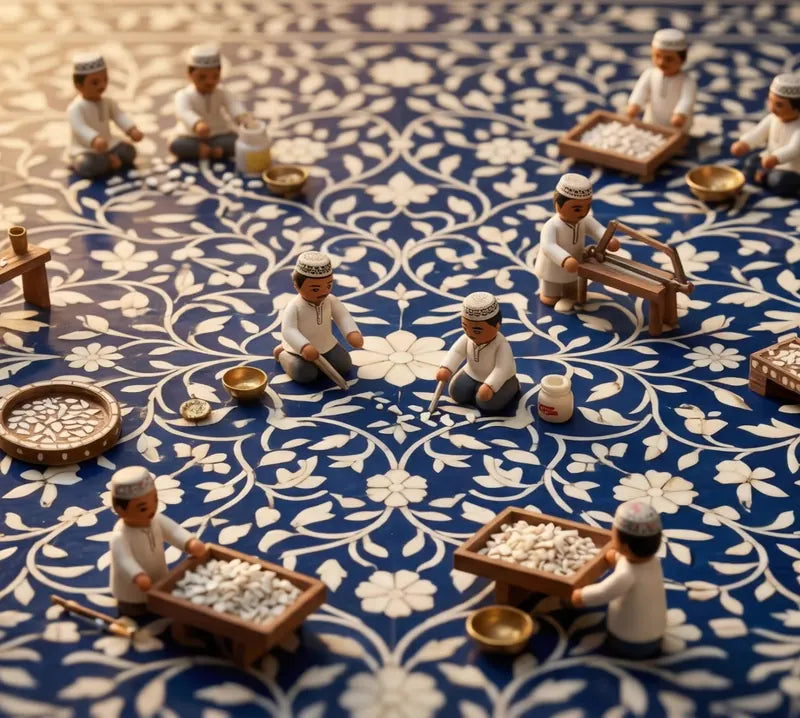
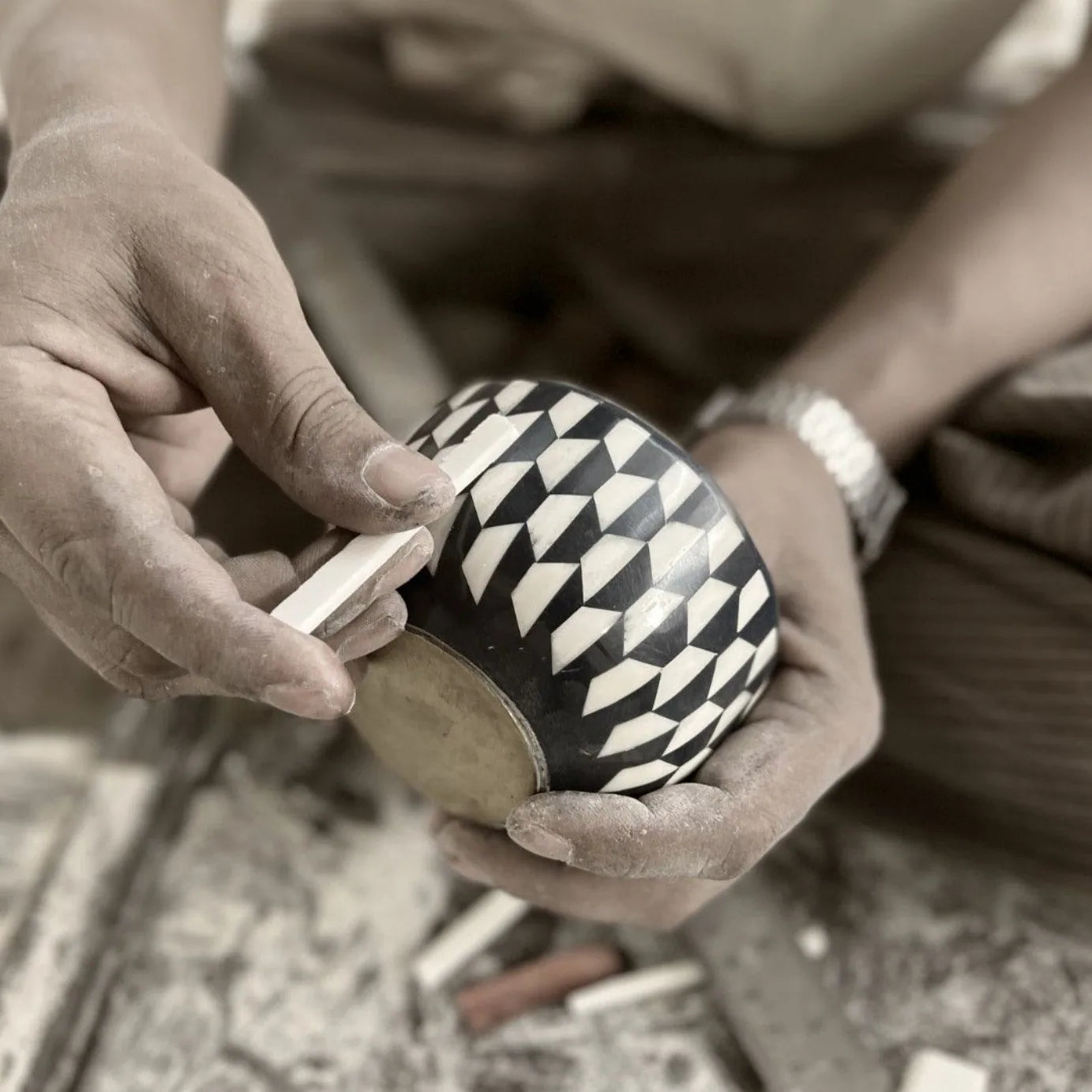
Inlay in India traces its origin to Rajasthan, where royal families commissioned artisans to create exquisite pieces for their palaces.
Inlay artisan, Sambhal


The centuries-old art of marble inlay, or pietra dura: each fragment of colour cut, placed and polished by hand into luminous patterns.
Flowers and vines in coloured stone, reinterpreted with the workshop for modern-day pieces. Two collections came out of it.


Rajasthani block prints are known for vibrant colours and motifs inspired by nature, folklore and Mughal aesthetics.
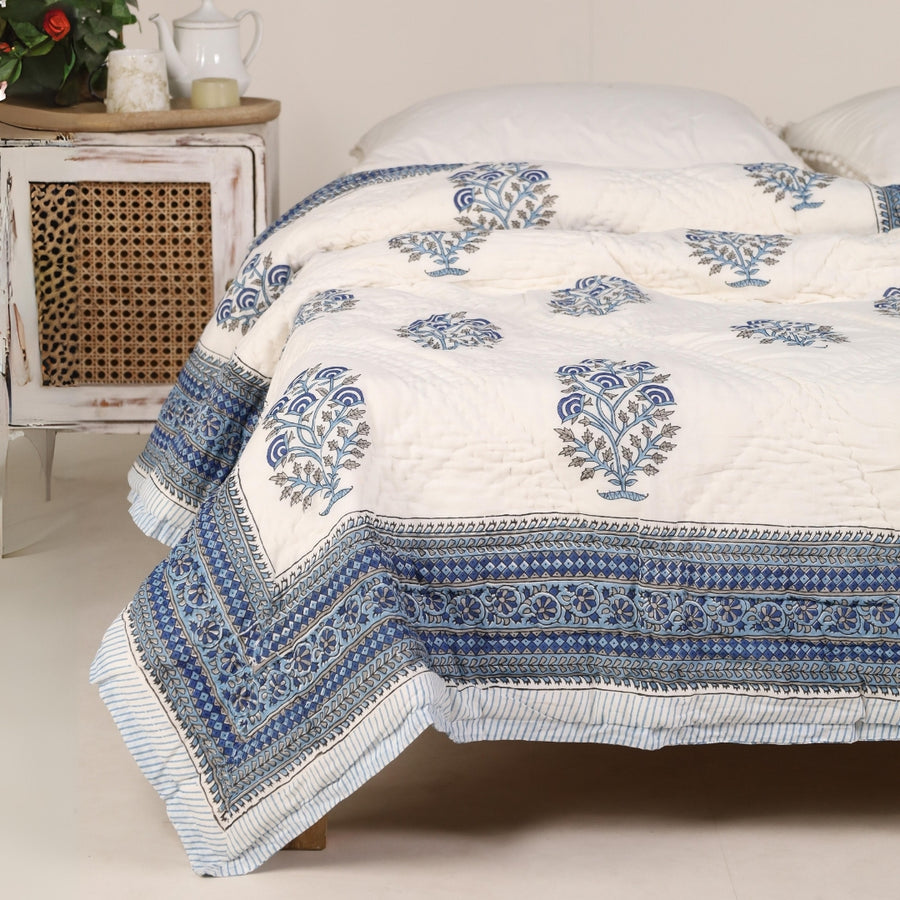 On the bedMughal Florals Single Cotton Reversible Quilt
 On the tableGulshan Floral Handprinted Cotton Tablecloth
Bagru prints with a mud-resist called Dabu; Sanganer is known for fine detail and bright hues. Yasin Shahabuddin of Pipar is a third-generation printer whose family has practised resist printing for over 200 years.


Rooted in a centuries-old tradition, Bidri ware finds new expression in the striking dialogue of luminous silver against deep, burnished black metal.
Bidri pieces are commissioned through the trade studio: silver inlay on blackened metal, engraved by hand, in flowers and fine borders.
Commission Bidri piecesBidriware itself is commissioned. These metal pieces ship now.
Three more workshops, photographed as they are.
No wheel is used. Each piece is shaped by hand from ground black serpentinite stone and a brown clay found only in Longpi village. Master artisan Thoiba Singh grew up in a family of potters.
Shop Longpi pottery →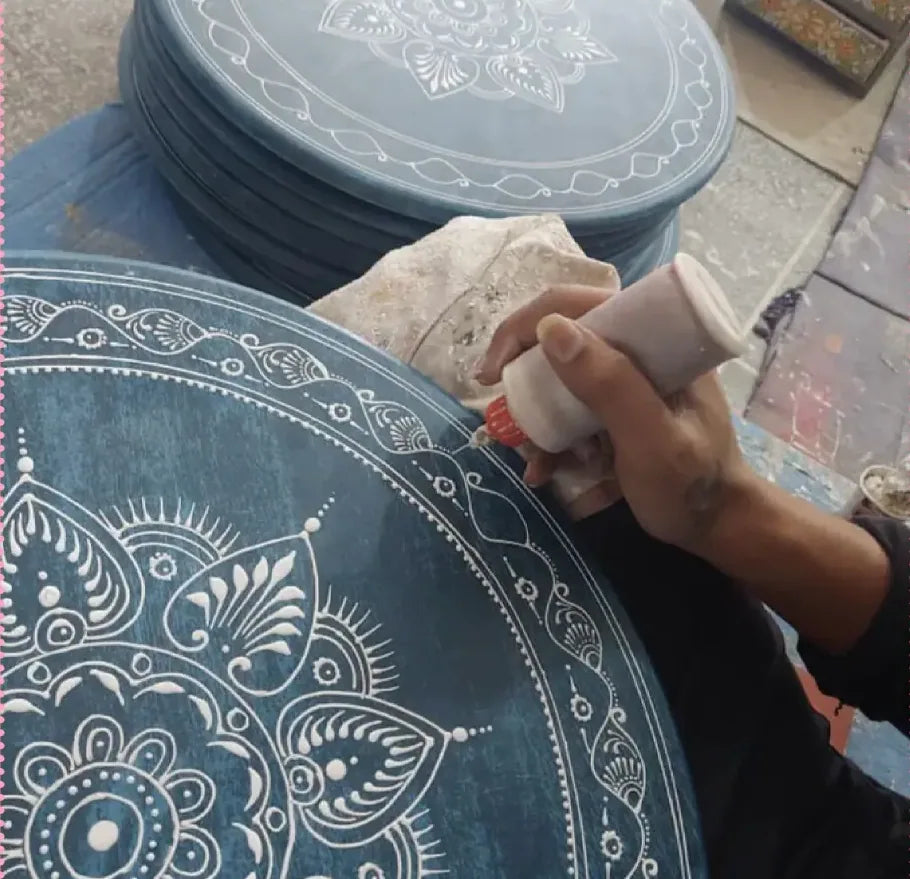
A body art that Jodhpur moved onto wood. Vinod Bhati has painted these mandalas every day for twenty-five years, and now teaches the next generation.
Shop hand-painted pieces →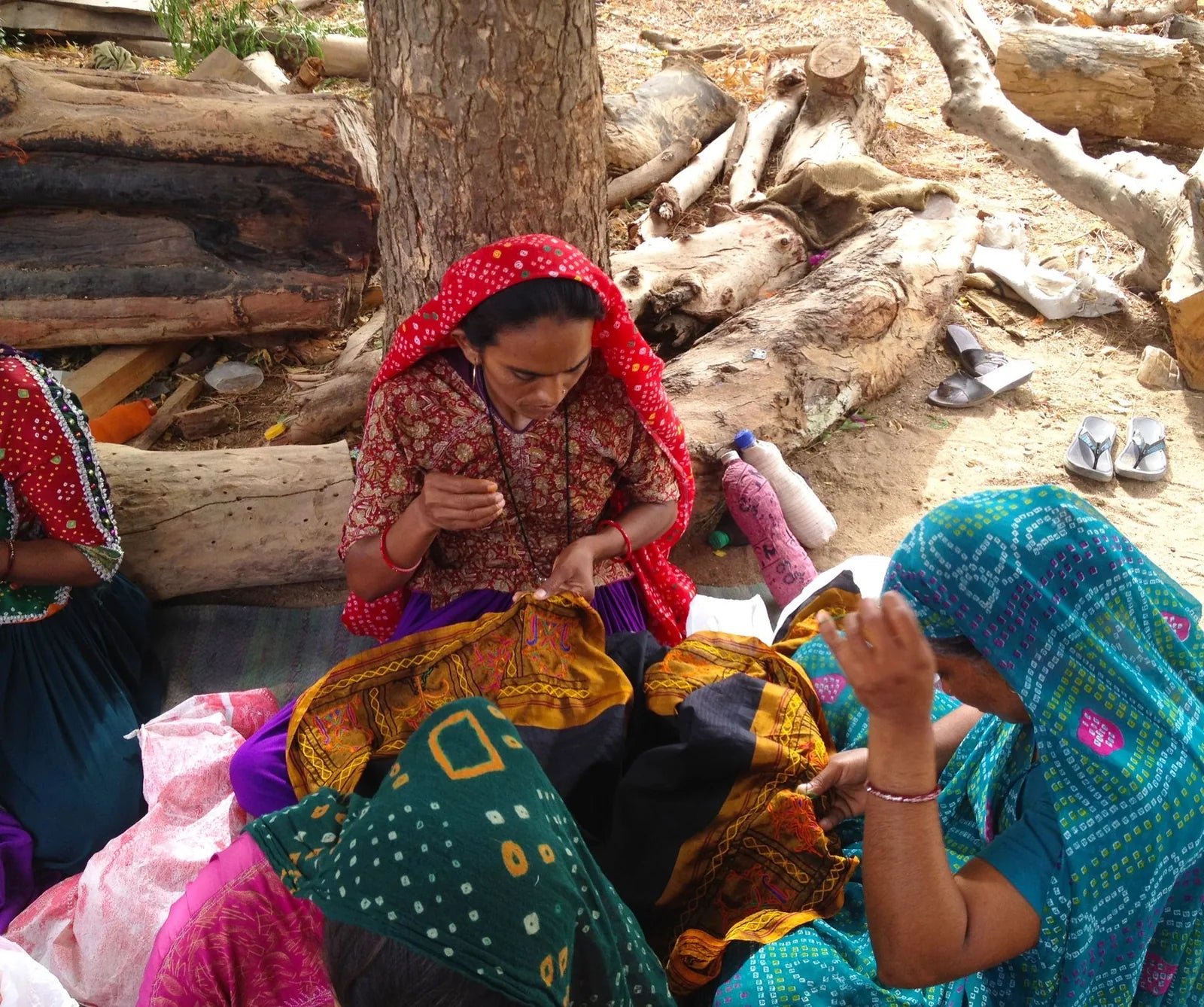
Kutch embroidery is practised by women of the tribal community, in simple stitches and a vivid palette. Crewel from Kashmir and Sujini from Bihar each tell it differently.
Shop textiles →The pieces, in rooms they were made for.
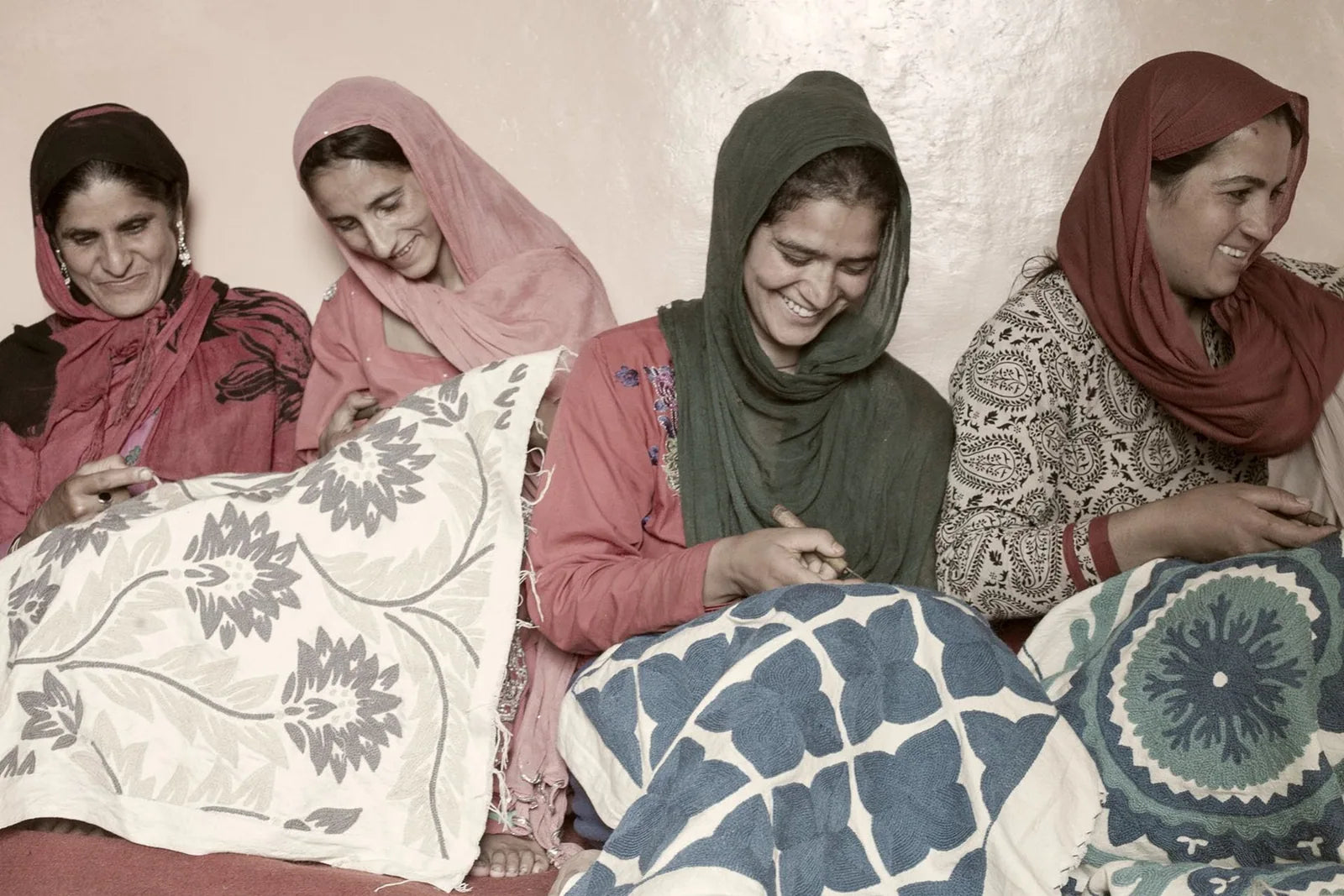
Artisan partners at work. Photograph from the Mela 2026/27 lookbook.
Partners rather than vendors, paid fairly and on time.
We go looking for the best artisans in India, workshop by workshop, and we stay. Partners rather than vendors: paid fairly, paid on time, and given the steady orders that make a craft worth passing on.
Seventeen collections from a vault of 6,000 designs.
Their skill meets our design vision. From a vault of more than 6,000 designs, this season comes down to seventeen collections, each built around one craft and one idea.
Made by hand, so no two are exactly alike.
A mela is a gathering. Every piece that reaches your table was cut, carved, printed or painted by hand, which is why no two are exactly alike.
Tap a marker to see the piece. Add it without leaving the page.

Mela began with a simple belief: commerce can preserve culture instead of commoditizing it.
“Our goal is not simply to source craftsmanship. It is to preserve it, strengthen it, and make sure it continues to thrive for generations.”
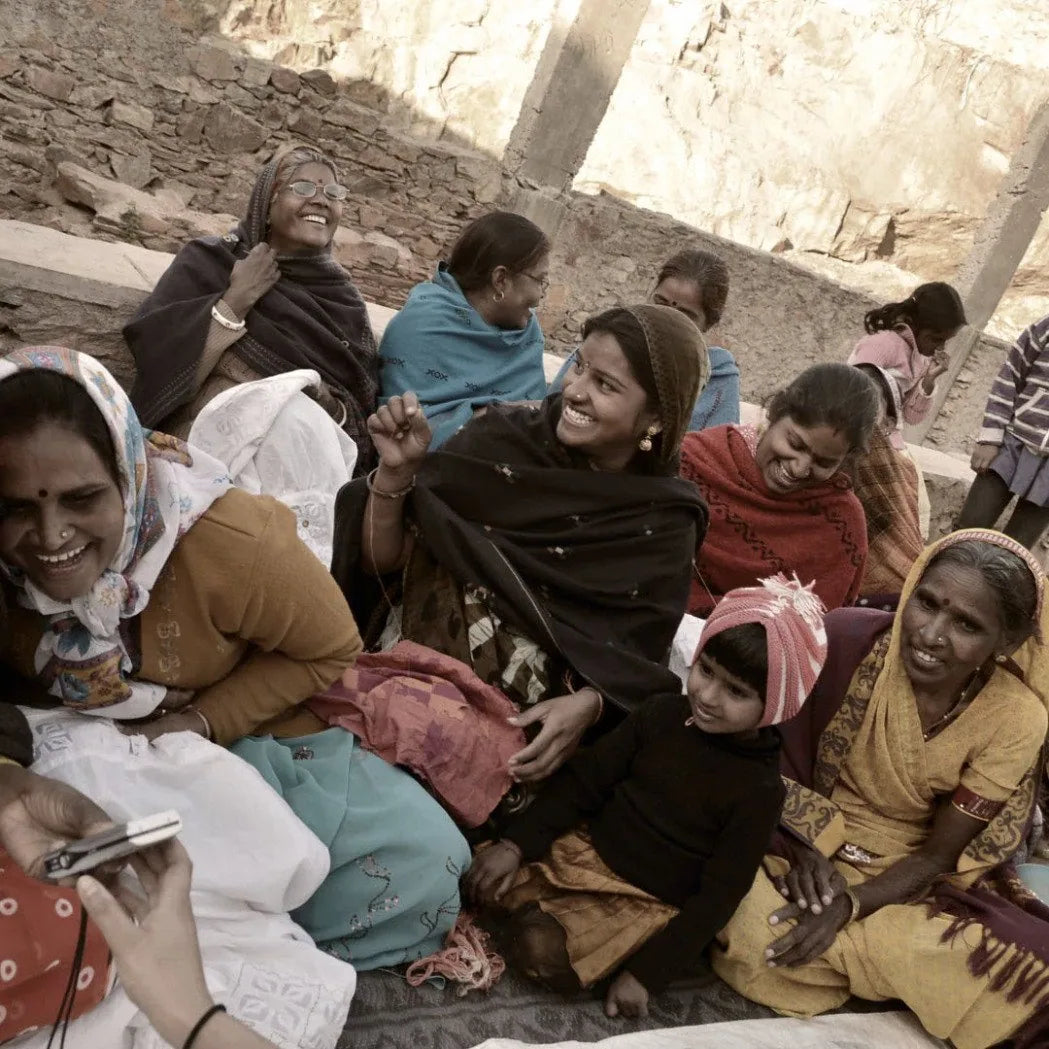

Quarterly merchandising, product development and global sourcing, carried by 3,500 artisans and 16 years of relationships.
Apply for trade access
Build tear sheets from the 2026/27 collections and commission inlay in your project’s own colours.
Open the gateway


